Change by Design Johannesburg (September 2023)
Exploring housing rights as defined by the UN, the South African Constitution, and national and local housing policy.

Johannesburg’s urban development still carries the legacy of apartheid-era spatial inequalities. The workshop took place shortly after a fire in an occupied inner-city building claimed the lives of over 77 people. That loss was still deeply present for many participants, and the sessions were shaped with care to make space for it rather than move past it.
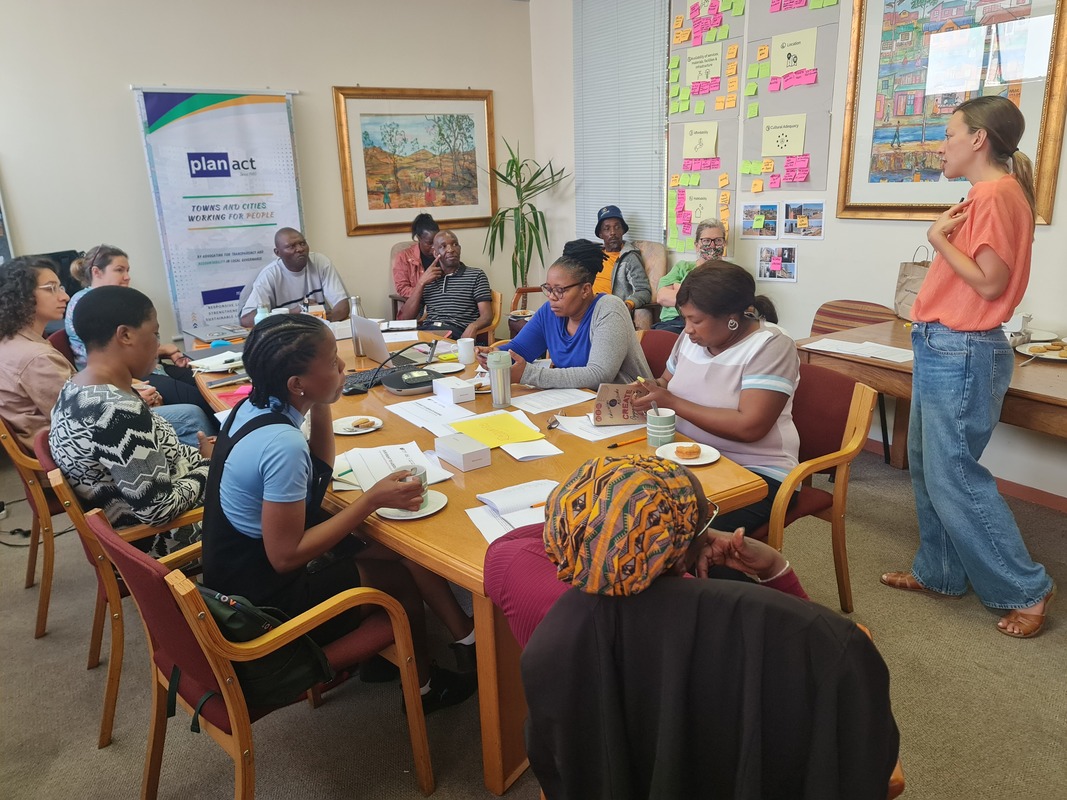
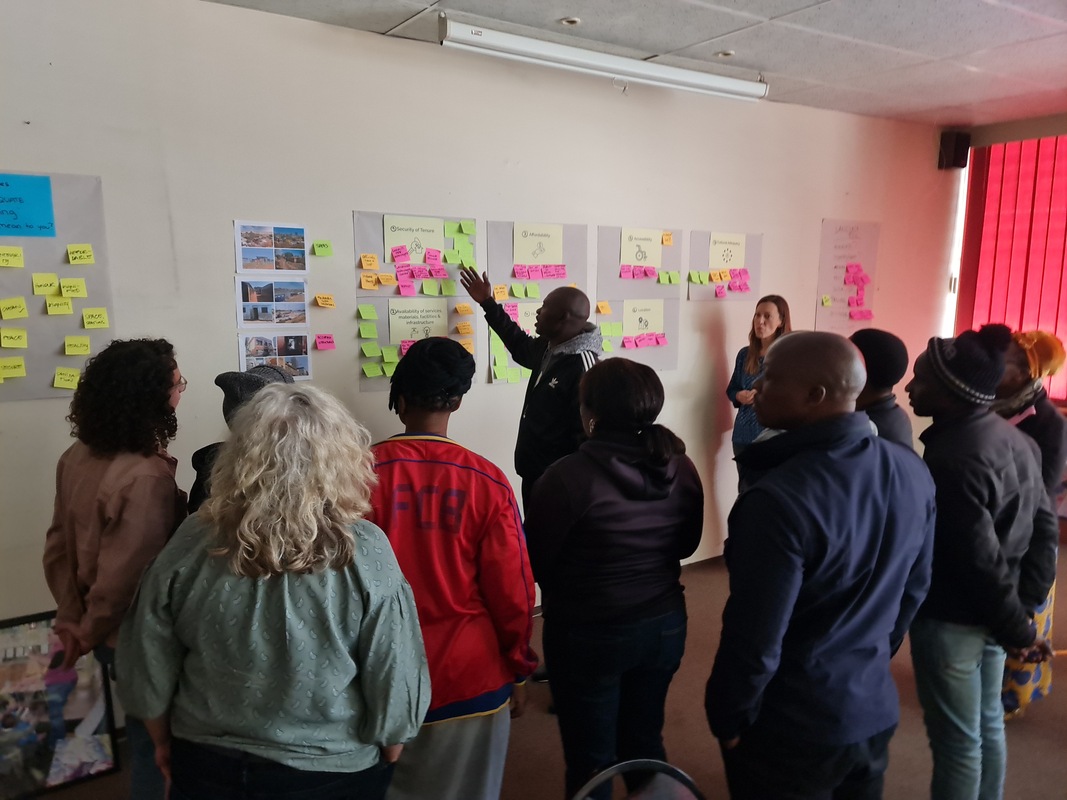
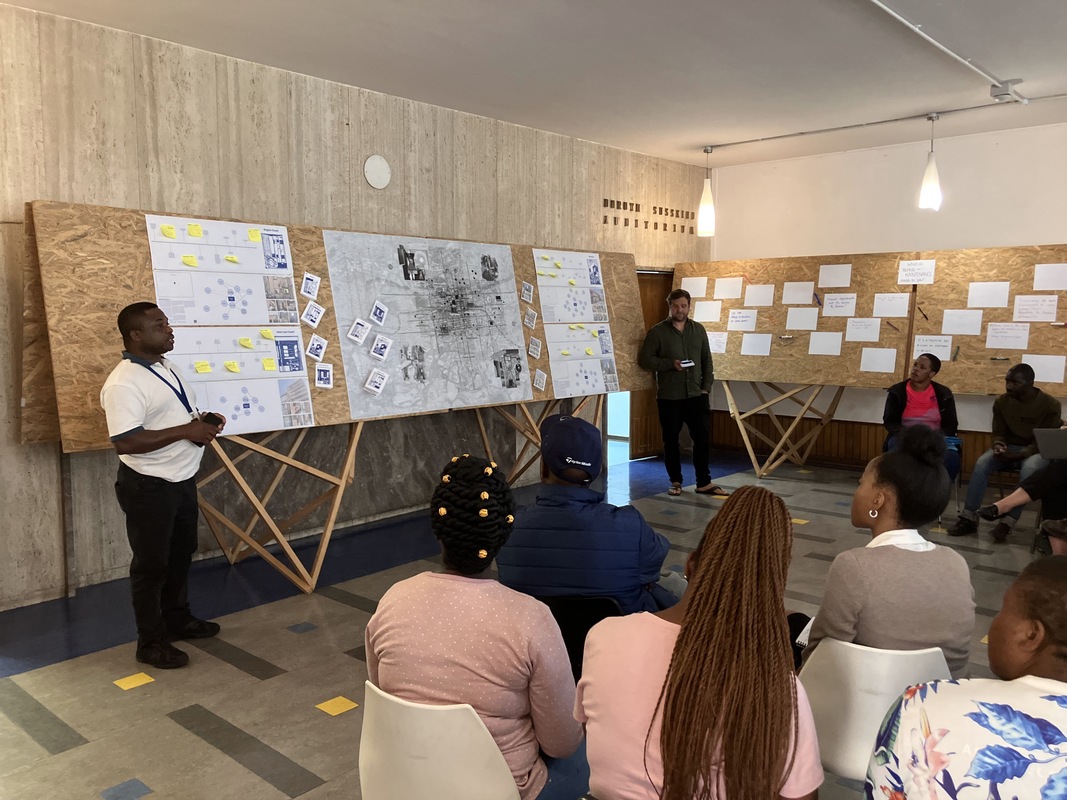
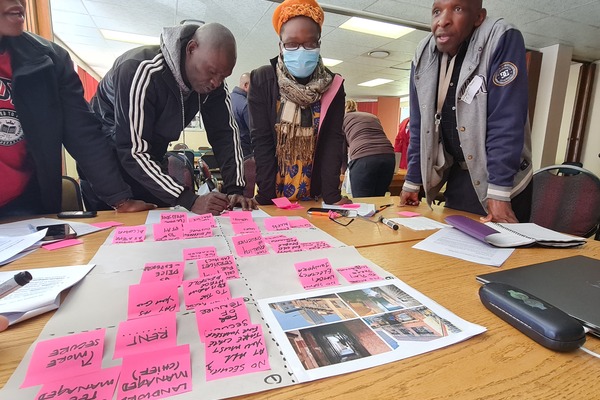
ASF-UK and 1to1 – Agency of Engagement, working with the International Institute for Environment and Development (IIED), ran a week-long peer learning programme as part of the broader Change by Design Johannesburg initiative. Where the January workshop had grounded itself in site-level diagnosis, this session cut across the methodology as a whole — building the shared understanding of housing rights that diagnosis, dreaming, developing, and defining all depend on. Through presentations, discussions, and group exercises, participants examined the gaps in current public policy and practice, working to connect broader policy frameworks to lived experience in the inner city.
Workshop participants also stressed the importance of multilingual resources for making information accessible and inclusive, so the report was produced in English, Sotho and Zulu. They also called for the language used in policies to be clear and easy to understand. The workshop’s outputs were then brought together in The Right to Adequate Housing – Practical Guide for Communities, which sets out the key points and interpretations raised in the discussions.
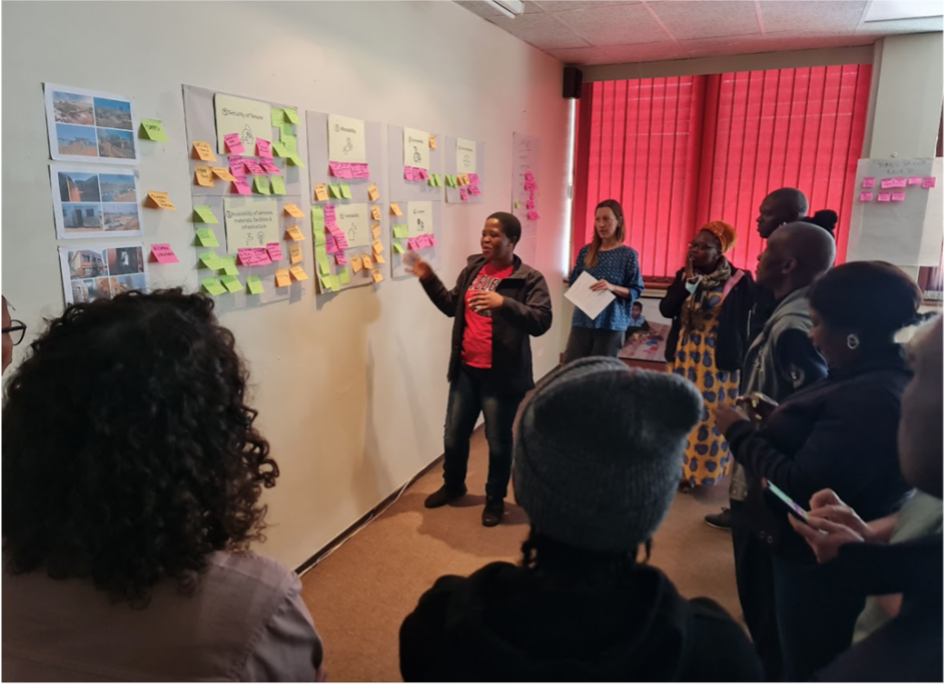
September 18 (DAY 1) – Exploring Housing Rights
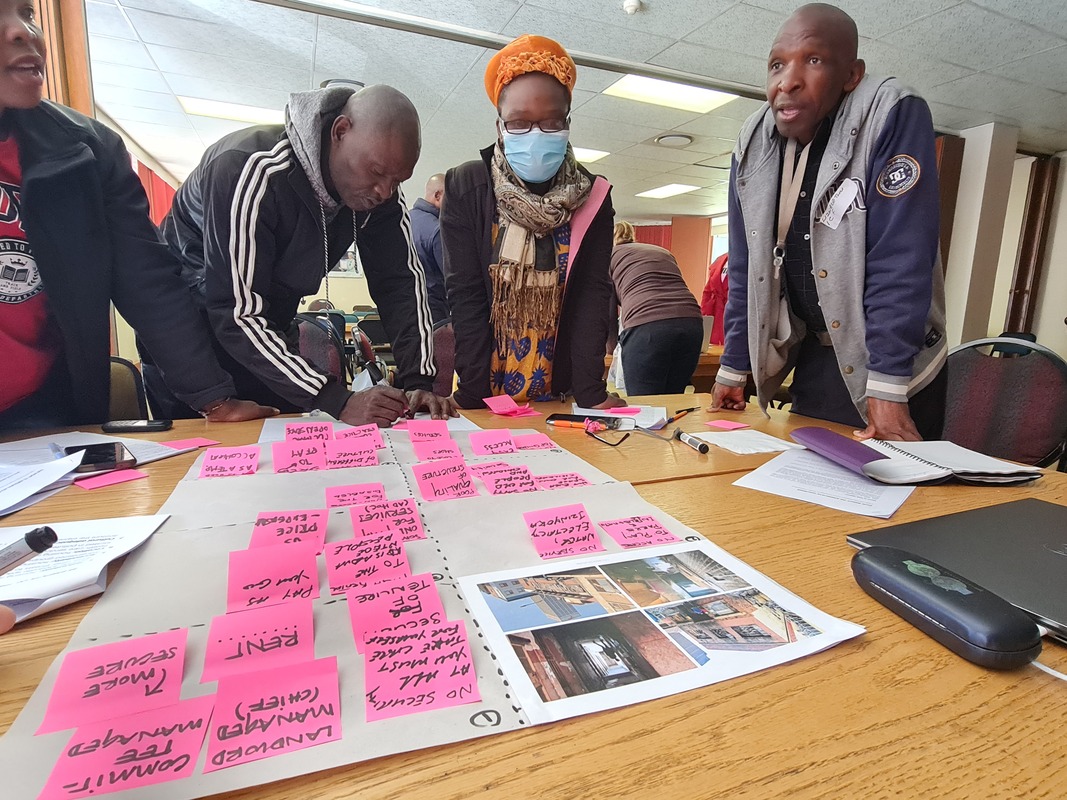
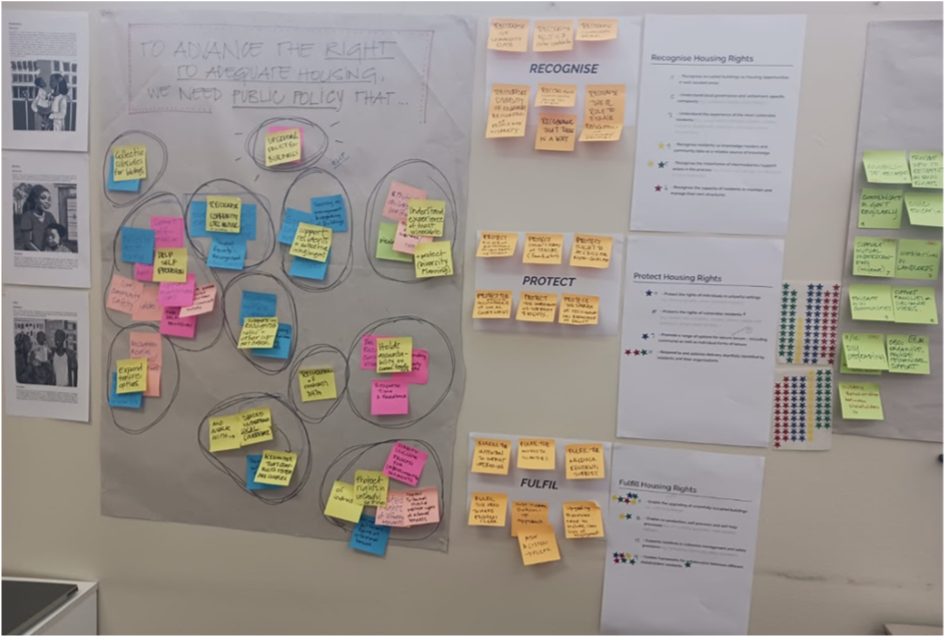
September 19 (DAY 2) – Group Activity on What public Policy Should Do
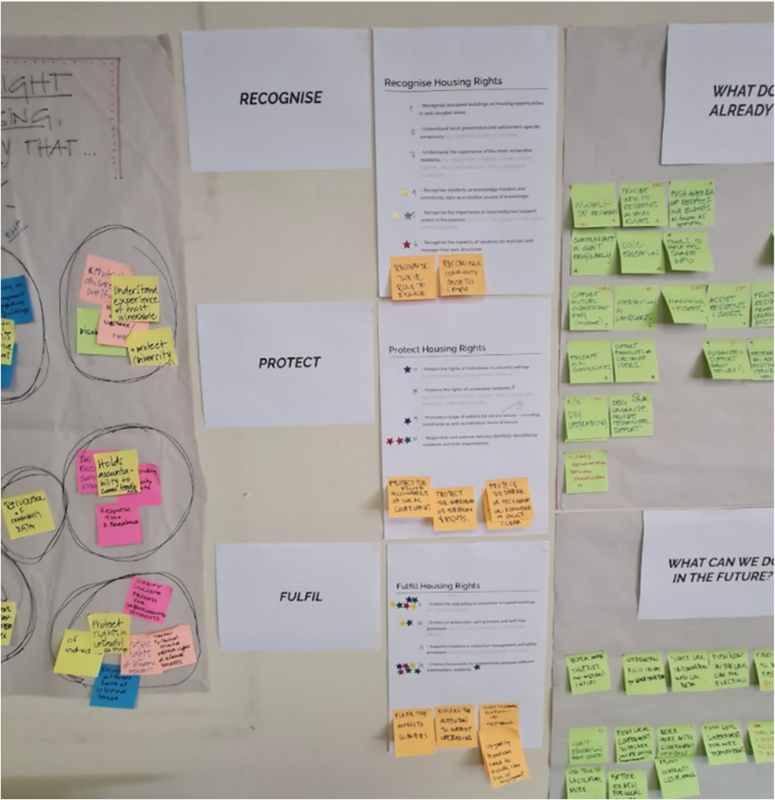
September 20 (DAY 3) – Exploring Different Pathways to Advance the Right to Adequate Housing