Change by Design Johannesburg (January 2023)
Exploring the role of participatory design and planning in advancing housing justice in Johannesburg's inner city.

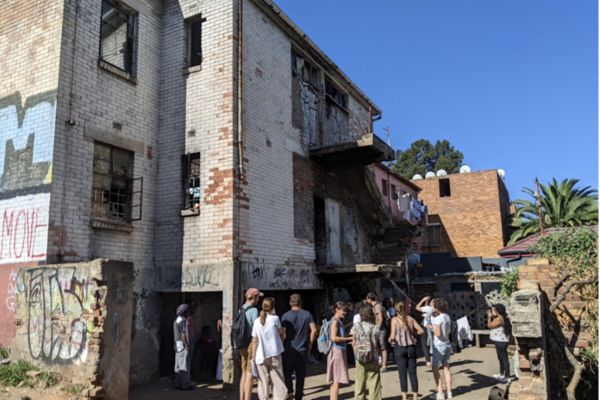
Residents living in Johannesburg’s informal settlements and occupied inner-city buildings navigate limited access to basic services, insecure housing conditions, and public and political narratives that too often stigmatise them. As part of its Change by Design programme, ASF-UK worked alongside grassroots organisations already active on these issues, helping turn evidence into a practical tool for change — particularly by supporting in-situ upgrading approaches for extra-lawfully occupied buildings, drawing on methods developed for informal settlement upgrading more broadly.
In January 2023, ASF-UK, 1to1 – Agency of Engagement, and grassroots partners including the Inner City Resource Centre (ICRC) and the Socio-Economic Rights Institute of South Africa (SERI) ran a public symposium and a six-day workshop in inner-city Johannesburg. Methodologically, this first workshop concentrated on the opening two stages of Change by Design — diagnosis and dreaming — establishing a baseline understanding of conditions in Bertrams, a site of occupied buildings, and Jumpers, an informal settlement, before any design or policy response was proposed. The programme wove together public discussions, socio-spatial tours, fieldwork, and collaborative research into how social dynamics shape access to services. Participants worked directly with communities in Bertrams and Jumpers, jointly mapping shared water, sanitation, and electricity systems to understand how residents negotiate infrastructure shortages collectively.
Through mapping, interviews, and other research at different scales, the workshop drew out the complex socio-economic relationships underpinning these settlements. Conversations centred on housing rights, the need for stronger legislation, and recognising residents as active contributors to the city rather than passive recipients of intervention. Findings were written up as resident profiles, site maps, and an internal instant report — laying the diagnostic groundwork that the following two years of Change by Design Johannesburg workshops would build on. Throughout, the aim was to support knowledge exchange, advocacy, and collaboration between communities, NGOs, researchers, and city stakeholders — as partners in the same effort, not separate camps.
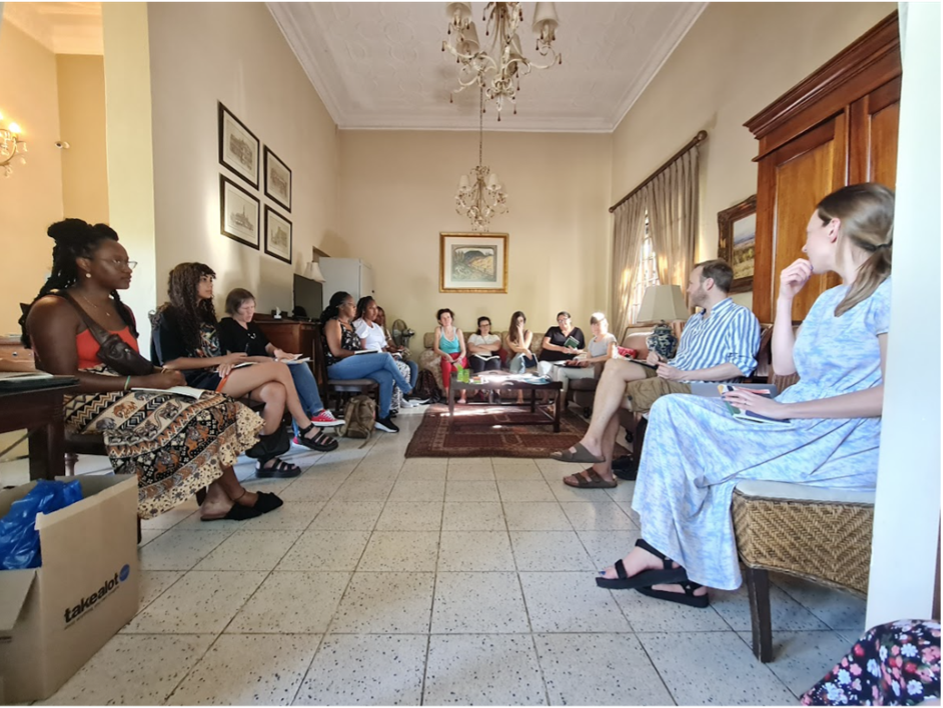
January 22 (DAY 1) – Workshop Introduction and Welcome Meeting (Melville Turret Guesthouse)
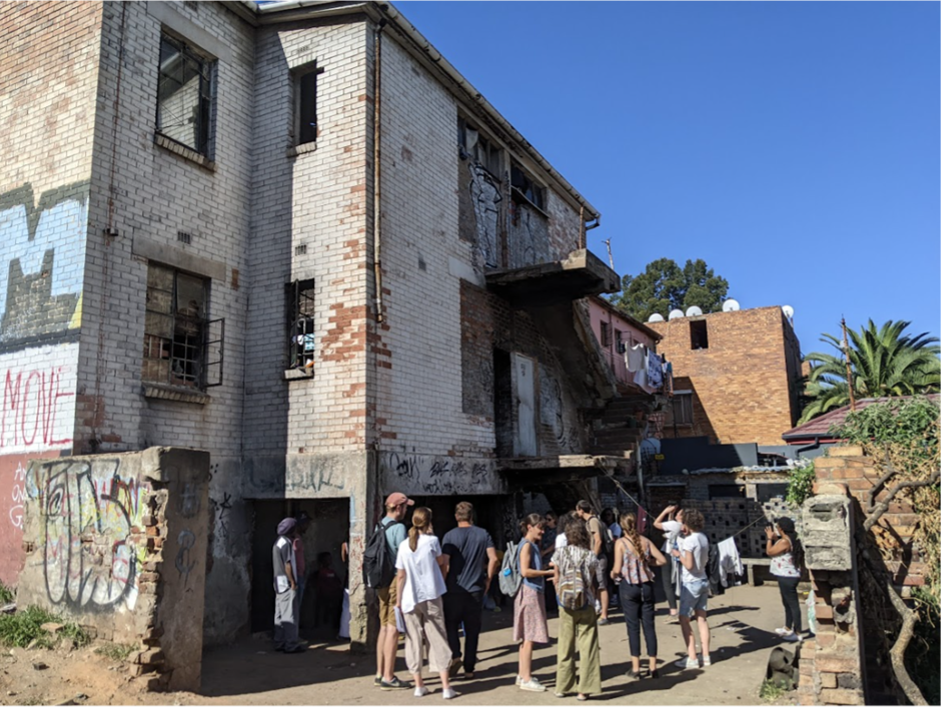
January 23 (DAY 2) – City Tour and Site Visits
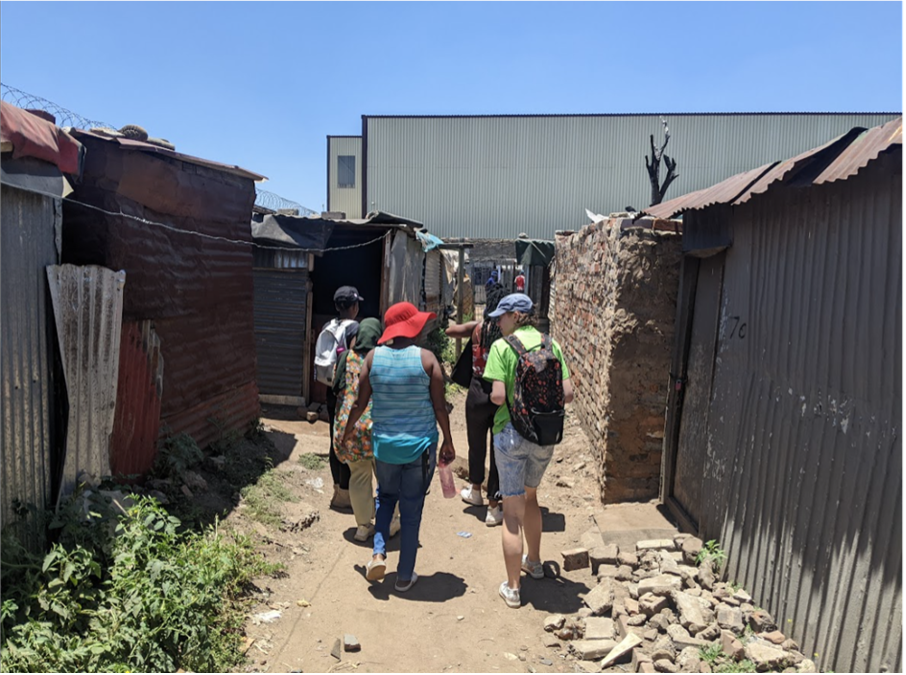
January 24 (DAY 3) – On Site Fieldwork
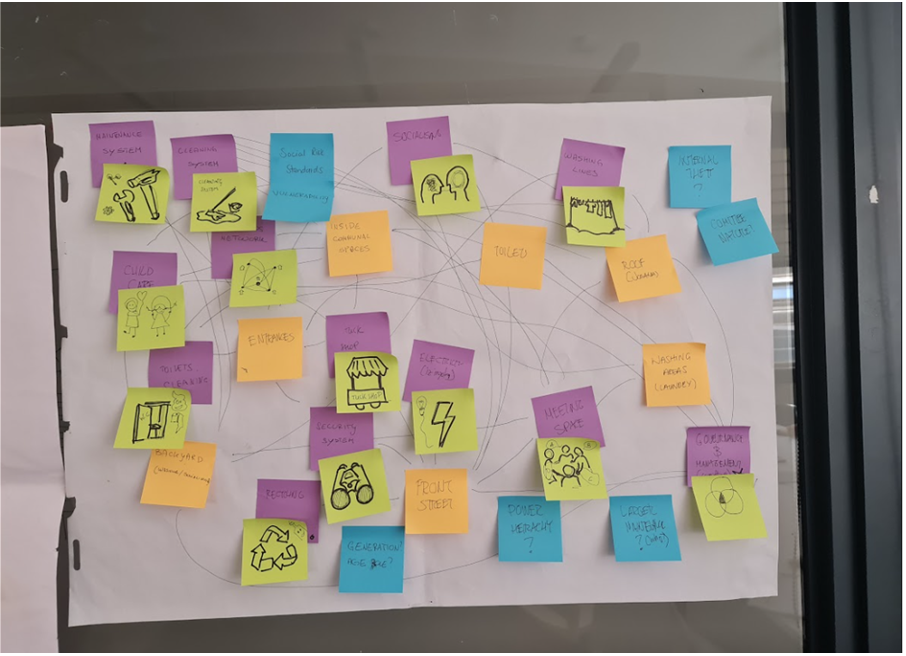
January 25 (DAY 4) – Fieldwork, Mapping of Overlapping Networks and Systems
January 26 (DAY 5) – Fieldwork, Preparation, Mini model of a settlement in Bertrams
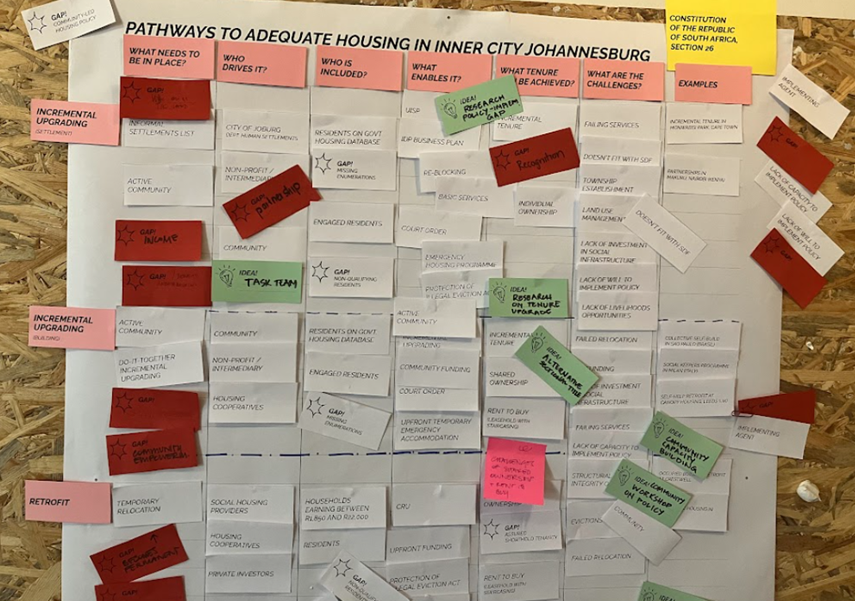
January 27 (DAY 6) – Final Event with Key Stakeholders, Discussion of future actions for all participants involved to take on

